 English
 عربى
عربى русский
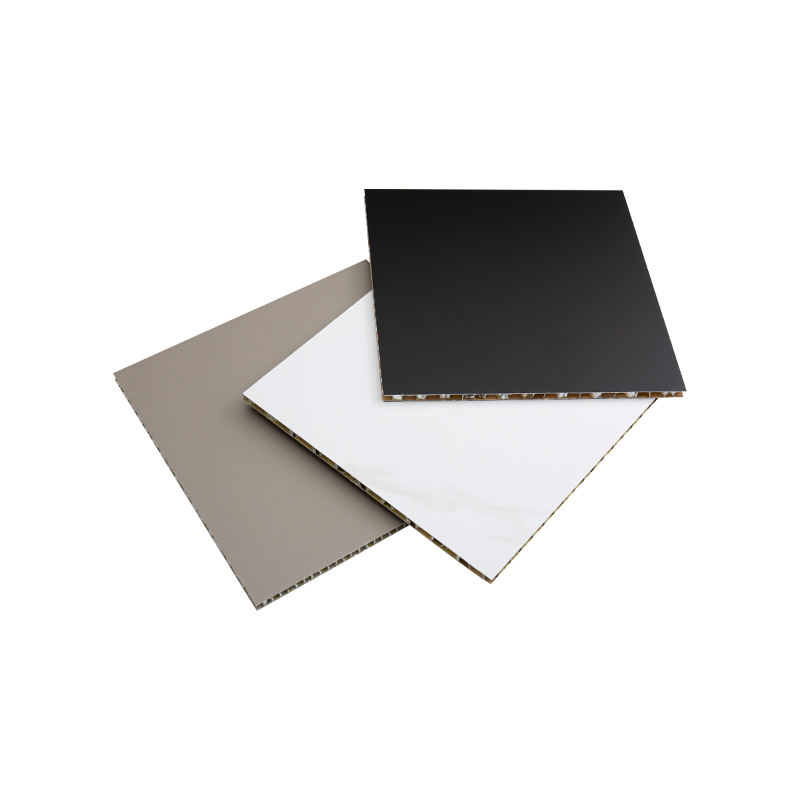
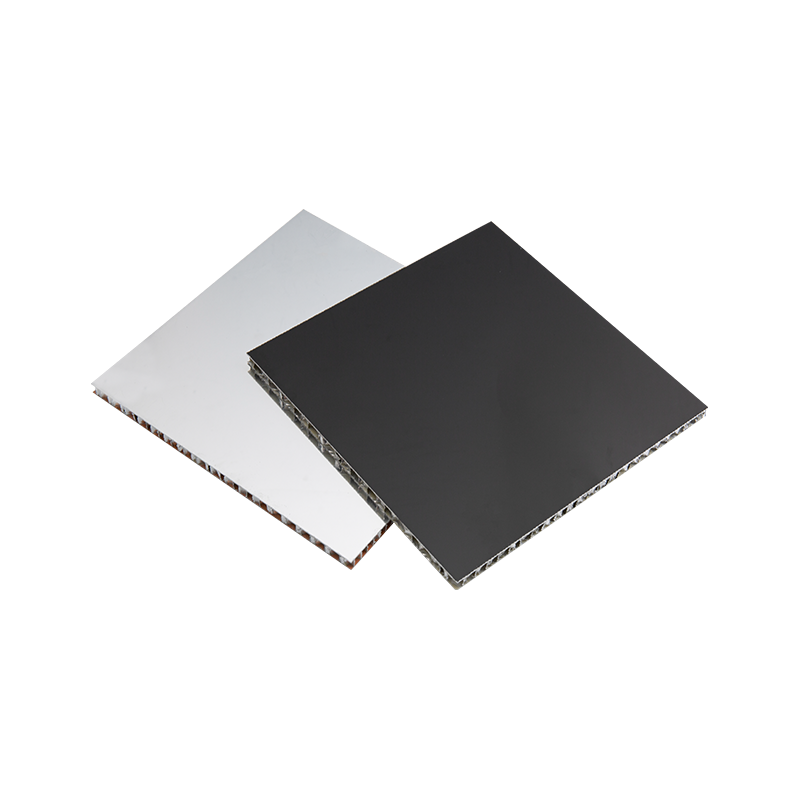
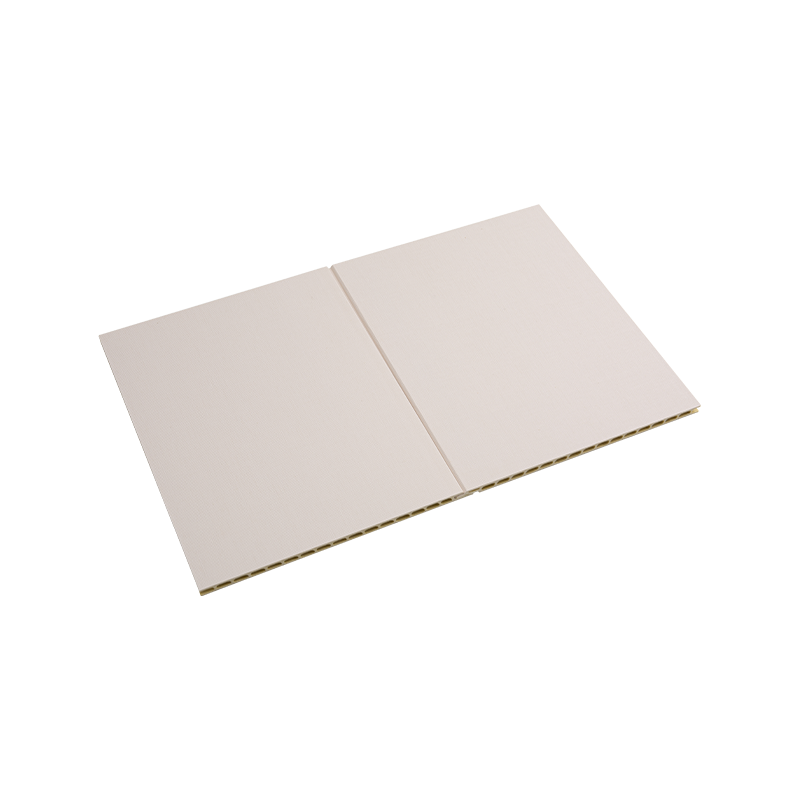
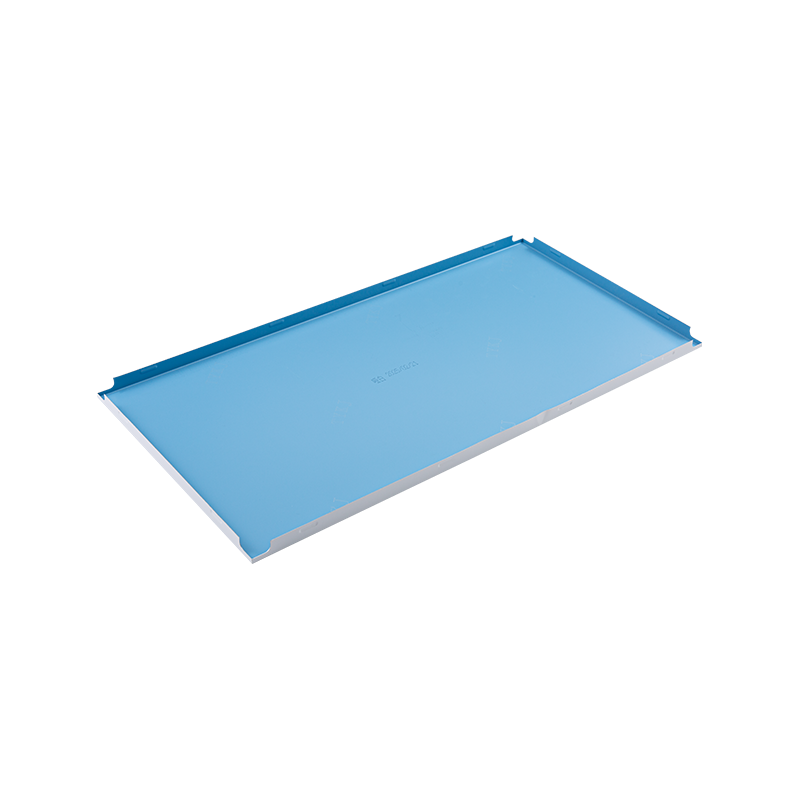
Aluminum honeycomb panels have become the specification of choice for suspended ceilings in commercial, hospitality, and high-end residential projects — yet the structural principle that makes them exceptional is not widely understood outside of architectural and construction circles. Understanding what honeycomb panels are, why the cellular core structure delivers such a superior strength-to-weight ratio, and how to choose between the panel formats available is essential for interior designers, project managers, and fit-out contractors specifying ceiling systems for demanding applications.
What Is the Honeycomb Core Structure and How Does It Work?
An aluminum honeycomb panel consists of three components bonded together: two thin aluminum face sheets (the skins), and between them, a core of hexagonal aluminum cells arranged in a pattern that resembles a natural honeycomb. The core cells are typically made from very thin aluminum foil (0.03–0.06mm) formed into hexagonal tubes and bonded to the face sheets with structural adhesive under heat and pressure.
The hexagonal cell geometry is not arbitrary — it is the most structurally efficient way to fill a planar space with a minimum of material while maximizing resistance to compressive and shear forces. When a load is applied to the face sheet of a honeycomb panel, it is distributed across the multiple cell walls that run perpendicular to the panel face, transferring the load through the core in compression. The result is a panel that is dramatically stiffer and stronger per unit weight than a solid aluminum panel of the same thickness.
To put this in practical terms: a 7mm aluminum honeycomb ceiling panel weighs approximately 3–5 kg/m², compared to 10–12 kg/m² for a solid aluminum panel of equivalent rigidity, and 8–10 kg/m² for a standard gypsum board panel. For a large commercial ceiling — a hotel lobby, a conference center, an airport terminal — this weight difference translates directly into reduced structural loading on the building frame and lighter, simpler suspension systems.
How Aluminum Honeycomb Panels Compare to Alternative Ceiling Materials
| Feature | Aluminum Honeycomb Panel | Solid Aluminum Panel | Gypsum Board (Plasterboard) |
|---|---|---|---|
| Weight (typical) | 3–5 kg/m² | 8–14 kg/m² | 8–13 kg/m² |
| Structural stiffness | Excellent — honeycomb core resists deflection | Good — depends on thickness | Moderate — requires frequent support points |
| Flatness | Excellent — face sheets supported continuously by the core | Good — but prone to oil-canning at large panel sizes | Moderate — joints require taping and filling |
| Moisture resistance | Excellent — aluminum face sheets are fully impervious | Excellent | Poor — absorbs moisture; swells and sags in wet environments |
| Fire resistance | Non-combustible aluminum — Class A fire rating achievable | Non-combustible | Non-combustible core; paper facing can contribute |
| Acoustic performance | Good with perforated face sheet + acoustic backing | Limited — solid face reflects sound | Good — widely used for acoustic ceiling applications |
| Large panel sizes | Excellent — up to 1200×3000mm without deflection | Limited — large solid panels exhibit oil-canning | Limited — large sheets require additional support |
| Surface finish options | Powder coat, anodizing, PVDF, mirror, wood grain transfer | Powder coat, anodizing, PVDF | Paint only after skim and prime |
| Durability in service | Excellent — aluminum does not corrode or degrade indoors | Excellent | Moderate — sensitive to impact, moisture, and humidity change |
| Maintenance | Minimal — wipe clean; no painting or sealing required | Minimal | Requires repainting; damaged sections need replastering |
| Typical application | Commercial lobbies, hotel ceilings, airports, clean rooms | Feature ceilings, exterior cladding, and smaller panels | Standard residential and commercial partitions and ceilings |
7mm vs 9mm Aluminum Honeycomb Ceiling Panels: Which to Choose?
The primary practical difference between 7mm and 9mm aluminum honeycomb ceiling panels is panel rigidity and the maximum unsupported span between suspension points. A thicker core provides more distance between the two face sheets, which significantly increases the panel's resistance to bending under self-weight and any additional load from above.
7mm Aluminum Honeycomb Ceiling Panels
7mm panels are the standard specification for most commercial ceiling applications where panel sizes are within 600×600mm to 600×1200mm — the most common ceiling grid formats for suspended ceiling systems. At these sizes, the 7mm panel's rigidity is more than adequate: deflection under self-weight is below 1/500 of the span, meeting the stringent flatness requirements of high-specification commercial interiors. The lower weight of 7mm panels (approximately 3–4 kg/m²) reduces the load on the suspension grid and simplifies installation logistics.
7mm seamless panels — where the face sheet wraps around the panel edges to create a flush, jointless appearance — are the premium variant within the 7mm range. The wrapped edge eliminates the visible aluminium edge profile that standard panels show at the suspension grid, creating the appearance of a continuous, uninterrupted ceiling plane. This seamless aesthetic is particularly valued in luxury hotel lobbies, high-end retail environments, and contemporary residential feature ceilings where visual cleanliness is a design priority.
9mm Aluminum Honeycomb Ceiling Panels
9mm panels are specified when larger panel sizes are required — 900×900mm, 1200×600mm, or custom large-format panels — or when additional loads are expected above the ceiling level. The additional core depth makes 9mm panels approximately 40% stiffer in bending than equivalent 7mm panels of the same face sheet specification. For span lengths above 1200mm between support points, the additional rigidity of 9mm construction prevents the subtle panel deflection that can be visible as a slight bowing effect in long runs of large ceiling panels under strong raking light.
9mm panels are also the specification of choice for exterior soffit applications — covered walkway ceilings, external building cantilever undersides, covered terrace ceilings — where occasional uplift wind loads and temperature cycling demand a more robust panel construction than interior-only applications.
Perforated Aluminum Honeycomb Panels for Acoustic Performance
Standard aluminum honeycomb panels are acoustically reflective — sound waves striking the hard aluminum face sheet are reflected rather than absorbed, which increases reverberation time in the space. For commercial environments where acoustic comfort is important — conference rooms, hotel banquet halls, open-plan offices, airport lounges — perforated aluminum honeycomb panels with an acoustic fleece or mineral wool backing provide sound absorption without sacrificing the visual and structural advantages of aluminum ceiling construction.
The perforation pattern — hole diameter, hole spacing, and open area percentage — determines the acoustic absorption coefficient of the panel at different frequencies. Standard perforation patterns achieve sound absorption coefficients of 0.5–0.8 at mid-frequencies (500–2000 Hz) with appropriate backing material, which is sufficient to achieve the NRC (Noise Reduction Coefficient) targets for most commercial acoustic requirements. Custom perforation patterns can be specified for projects with specific acoustic targets or where the perforation pattern is part of the ceiling's visual design.
Surface Finish Options for Aluminum Honeycomb Ceiling Panels
Powder Coating
Powder coating is the standard finish for most commercial aluminum honeycomb ceiling panels. Electrostatic powder coating applied to the aluminum face sheets in a factory environment produces a hard, uniform, chip-resistant finish in any RAL or custom color. Film thickness of 60–80 microns provides good scratch and chemical resistance for interior applications. Powder coating is available in matte, satin, and gloss finishes, and in texture effects — fine texture, wrinkle, hammertone — that reduce the visibility of minor surface imperfections on large ceiling panels.
PVDF Coating
PVDF (polyvinylidene fluoride) coatings provide superior UV resistance and color stability compared to standard powder coat — making them the specification for exterior soffit applications and for interior applications in high-UV environments such as atria with large glazed roof areas. PVDF maintains its color and gloss for 20+ years in exterior exposure, compared to 5–10 years for standard polyester powder coat. The higher cost of PVDF coating is justified for long-term exterior applications; for standard interior ceiling use, powder coating is the cost-effective standard.
Mirror Finish
Mirror-finish aluminum composite ceiling panels — where the face sheet is polished to an optical mirror surface — create dramatic visual effects in retail, hospitality, and luxury residential ceiling applications. Mirror panels reflect the surrounding space to create an illusion of greater height and visual complexity that cannot be achieved with any painted or textured surface. The reflective surface also amplifies lighting effects — a mirror ceiling panel below a pendant light installation multiplies the visual impact of the lighting scheme significantly.
Frequently Asked Questions
How are aluminum honeycomb ceiling panels installed?
Aluminum honeycomb ceiling panels are typically installed in one of two systems. In a suspended grid system, a lightweight aluminum T-bar grid is hung from the structural ceiling above using adjustable wire or rod hangers, and the honeycomb panels are laid into or clipped onto the grid — a fast, accessible system that allows individual panels to be removed for maintenance access to the plenum above. In a direct fix system, aluminum extrusion perimeter tracks and hidden clip carriers are fixed directly to the structural substrate, and panels are installed by engaging the clip system — producing a cleaner visual result without visible grid lines. Direct fix systems are used for higher-specification applications where the continuous ceiling plane appearance is prioritized over access flexibility.
Can aluminum honeycomb ceiling panels be cut on-site?
Aluminum honeycomb panels can be cut on site with a fine-tooth circular saw or jigsaw to accommodate perimeter cuts and penetrations for light fittings, sprinkler heads, and HVAC grilles. The cut edge reveals the honeycomb core, which is typically finished with an aluminum edge strip or silicone sealant for a clean appearance. Factory-cut panels with finished edges are preferable for high-visibility cuts — particularly for lighting cutouts and air grille openings that will be visible in the finished ceiling — as factory cutting produces cleaner edges than site cutting in most cases.
Are aluminum honeycomb panels suitable for humid environments?
Yes — aluminum honeycomb ceiling panels are among the most moisture-resistant ceiling materials available and are well-suited to indoor swimming pools, spa facilities, commercial kitchens, covered outdoor areas, and any environment where humidity is consistently elevated. The aluminum face sheets and core are inherently impervious to moisture; corrosion is not a concern in indoor environments. The adhesive bonding the core to the face sheets should be specified as moisture-resistant for applications where condensation may form on the panel underside, as in pools and cold-room ceilings.
Ceiling Aluminum Honeycomb Panel | 7mm Aluminum Honeycomb Ceiling Panel | 9mm Aluminum Honeycomb Ceiling Panel | Perforated Honeycomb Panel | 7mm Seamless Panel | Mirror Aluminium Composite Panel | Get a Quote