 English
 عربى
 русский

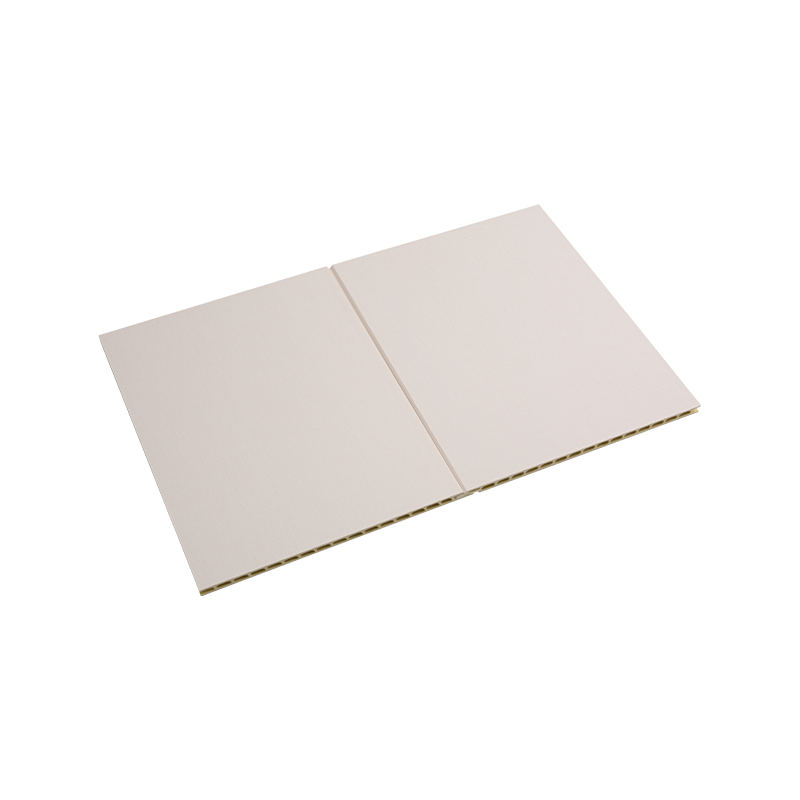

A decorative wall can look perfectly aligned immediately after installation and still develop visible gaps weeks or months later. When this happens, the first explanation is often that the WPC wall panel has “shrunk.” In reality, open joints are usually caused by several factors working together, including temperature-related movement, installation tolerance, substrate flatness, panel fit, fastening method and the way long wall sections are planned.
For contractors, distributors and project buyers, understanding these causes is important because an open joint is not always evidence of a defective panel. In many cases, the problem begins with installation conditions or cumulative error across a long wall. The most effective way to reduce the risk is to manage the complete wall system rather than focusing on the panel alone.
What Does an “Open Joint” Actually Look Like?
Not every visible gap has the same cause. Before deciding how to correct the problem, the installer should identify what type of joint movement has occurred.
| Joint Problem | Typical Appearance | Possible Cause |
| Uniform gap between panels | Several adjacent joints open by a similar amount | Temperature movement, installation temperature or cumulative fitting error |
| One isolated open joint | Only one connection separates | Incomplete engagement, local substrate issue or damaged tongue-and-groove edge |
| Gap near a corner or end trim | Joint opens close to a fixed profile | Insufficient movement allowance or excessive restraint |
| Joint opens together with bowing | Panel edge pulls outward and creates a gap | Warping, uneven support or internal stress |
| Progressive gap along a long wall | Small errors increase from one end of the wall to the other | Accumulated installation tolerance |
Temperature-Related Movement Is One of the Main Factors
WPC products, like other thermoplastic-based materials, expand and contract when temperature changes. The amount of movement depends on the formulation, profile design, panel length and the temperature range experienced during transport, storage and service.
This is why the installation temperature matters.
A panel installed while very warm may later contract when the room becomes cooler. A panel installed in a cold environment may expand after the building HVAC system is activated or when seasonal temperatures rise.
The movement of one individual panel may be small, but across a long uninterrupted wall, the total dimensional change can become noticeable.
Long Panels Need More Attention
The longer the panel, the greater the total dimensional movement for the same temperature change. Long hotel corridors, retail walls and large commercial feature walls therefore need more careful joint planning than a small residential accent wall.
This does not mean that long panels are unsuitable. It means the installation system should provide the correct movement allowance and should not lock the entire wall too rigidly from end to end.
Insufficient Acclimatization Can Create Early Movement
Panels may experience very different temperatures during production, warehouse storage, shipping and installation.
For example, an export shipment may arrive after spending weeks in a container exposed to high daytime temperatures. The panels may then be unloaded into an air-conditioned interior and installed immediately.
If the material has not had time to stabilize under the actual project conditions, dimensional movement can continue after installation.
A similar problem can occur when panels are stored in an unheated warehouse and then installed in a warm completed building.
Panels May Not Have Been Fully Engaged During Installation
One of the simplest causes of open joints is also one of the easiest to overlook: the tongue-and-groove connection was never fully seated.
This can happen when:
- the substrate is uneven;
- the previous panel is slightly twisted;
- the groove contains debris;
- the panel edge has been damaged;
- the installer is working too quickly;
- the profile is forced into position at an angle.
A partially engaged connection may look acceptable from a distance. After the wall is completed, however, later panels can transfer stress back through the row and make the earlier joint more visible.
Check Every Few Panels, Not Only at the End
On long walls, installers should check alignment and joint engagement regularly. Waiting until twenty or thirty panels have been installed can make correction much more difficult.
A simple straightedge, laser reference or repeated measurement from a fixed starting point can help identify cumulative error before it becomes obvious.
Uneven Substrates Can Force Joints Apart
Decorative wall panels perform best when installed over a substrate or support system that is sufficiently flat and stable.
If the wall has high and low areas, installers may unintentionally force each panel to follow the irregular surface. This can create stress in the tongue-and-groove connection.
The problem is especially common when:
- old walls are not leveled before renovation;
- battens are installed out of plane;
- support spacing is inconsistent;
- local wall bulges are ignored;
- adhesive thickness varies significantly.
The finished wall may look flat immediately after installation because the panels are being held in place. Over time, however, the material may try to return toward its natural shape, causing joints to open or edges to lift.
Over-Fastening Can Prevent Normal Panel Movement
A wall panel needs to be secured, but “more fixed” does not always mean “more stable.”
If fasteners, clips or adhesive restrain every section too rigidly, normal dimensional movement has nowhere to go. Stress can then concentrate at the weakest point, often a joint, edge or corner.
Common Over-Fastening Problems
- screws driven too tightly;
- clips installed without sufficient movement allowance;
- rigid adhesive applied continuously where a more flexible system is required;
- end profiles trapping the panel too tightly;
- corners installed without enough clearance.
The correct fixing method depends on the panel design. Installers should therefore use the fastening system intended for the specific product rather than improvising based on another wall material.
End Trims and Corner Profiles Can Create Hidden Restraint
Decorative profiles improve the finished appearance of a wall, but they also influence how the panels are allowed to move.
Internal corners, external corners, end trims and aluminum decorative lines should be selected to match the panel thickness and installation method.
If the trim slot is too tight, or the panel is pushed firmly against the bottom of a profile without movement allowance, the trim can act as a fixed stop.
As the wall expands or contracts, stress may then be transferred to the nearest visible joint.
This is one reason why wall panels and trims should be considered as one coordinated system instead of being purchased and installed independently.
Cumulative Installation Error Becomes More Serious on Long Walls
A small positioning error may not matter on one panel. Repeated across thirty or forty panels, the same error can become substantial.
For example, if each panel is installed slightly out of alignment or not fully engaged, the final section of the wall may be several millimeters away from the intended position.
Installers should therefore avoid treating each panel as an isolated piece.
Use Fixed Reference Points
Good installation practice can include:
- checking the starting line carefully;
- using a laser or level reference;
- measuring cumulative coverage after several panels;
- checking vertical alignment regularly;
- planning transitions or break points on very long walls.
For large commercial projects, dividing a long decorative wall into controlled sections can also reduce the visual effect of minor dimensional changes.
Panel-Length Variation Can Add to Joint Problems
Dimensional tolerance is another factor that deserves attention. Even when the tongue-and-groove connection is correct, variation in panel length or width can influence the final wall layout.
For OEM and project orders, buyers should confirm:
- panel length tolerance;
- effective width tolerance;
- overall thickness;
- straightness;
- profile fit.
A small dimensional variation may be acceptable for an individual panel, but a large project can amplify the effect if different batches are mixed without control.
HVAC and Building Conditions Can Change After Installation
Another overlooked factor is that the building itself may not be operating under its final conditions during installation.
Projects are often completed while:
- HVAC systems are not yet running normally;
- wet trades are still active;
- doors and windows are frequently open;
- construction humidity remains high;
- interior temperatures fluctuate significantly.
After handover, the building may move to a much more stable and different temperature environment.
That environmental change can cause panel movement even though nothing changed in the installation itself.
For this reason, critical decorative installations should ideally be carried out under conditions reasonably close to the expected service environment where project schedules allow.
How Manufacturers Can Help Reduce Joint-Opening Risk
Manufacturing consistency also matters. A well-controlled profile is easier to install accurately than a profile with changing dimensions or fit.
Manufacturers can reduce risk by controlling:
- Profile dimensions: stable effective width and tongue-and-groove geometry.
- Straightness: reduced bowing or twisting before shipment.
- Wall and rib thickness: consistent profile stiffness.
- Cooling: balanced processing to minimize residual stress.
- Batch consistency: similar profile fit across repeated production runs.
- Matching trims: compatible slot sizes and panel thickness.
- Packaging: proper support to reduce transport deformation.
For project and OEM orders, retaining a controlled sample from the approved production batch can also make later troubleshooting easier.
What Installers Should Check Before and During Installation
Before Installation
- Confirm the wall is sufficiently flat.
- Check panels for transport deformation.
- Allow the material to stabilize under suitable project conditions.
- Review trims, corners and fixing accessories.
- Confirm movement allowance requirements.
During Installation
- Fully engage every tongue-and-groove joint.
- Check alignment every few panels.
- Avoid over-fastening.
- Do not force panels against fixed corners.
- Keep support spacing consistent.
For Long Walls
- Measure cumulative coverage.
- Use fixed alignment references.
- Plan transitions or segmentation where necessary.
- Avoid mixing visibly different production batches randomly.
After Installation
- Inspect joints before project handover.
- Check corner and end-trim restraint.
- Review any areas near heat sources or major temperature differences.
- Document the installation batch for future maintenance.
What Should Be Done If Joints Have Already Opened?
The correct repair depends on the root cause. Simply pushing the panels back together may provide only a temporary improvement.
Check Whether the Joint Was Fully Engaged
If the connection was never completely seated, the affected section may need to be released and reinstalled.
Check the End Conditions
If the wall is trapped tightly between two corners or trims, correcting the movement allowance may be necessary before the joint can remain closed.
Check the Substrate
A joint that repeatedly opens in the same location may indicate a local wall or support problem.
Check for Panel Deformation
If the panel itself has developed permanent bowing or twisting, correcting only the joint may not solve the problem. The affected profile may need replacement.
Avoid Cosmetic Repairs Before Diagnosing the Cause
Filling a moving joint with sealant or another cosmetic material can hide the gap temporarily but may create a different defect if the wall continues to move.
Root-cause diagnosis should come first.
Joint Control Is Part of the Complete Wall-System Design
Visible gaps between decorative wall panels are rarely caused by only one factor.
Material movement, panel dimensions, substrate flatness, fixing method, trim design, installation temperature and cumulative positioning error can all influence joint stability.
For manufacturers, this means profile accuracy and trim compatibility are important parts of product quality.
For contractors, it means careful substrate preparation and regular alignment checks matter just as much as the panel itself.
For project buyers, it means that selecting a complete wall system—including panels, decorative lines and matching trims—can reduce compatibility problems compared with sourcing each component separately.
Planning a WPC Wall Panel Project?
Zhejiang QianDuoMu Intelligent Decoration Co., Ltd. supplies WPC wall panels, wall cladding, WPC decorative lines, aluminum decorative profiles and related interior decoration materials for residential and commercial applications.
Share your wall-panel profile, project dimensions, installation conditions, quantity and destination market with our team. We can discuss suitable panel structures, matching trims, OEM/ODM requirements, packaging and installation considerations for your project.
FAQ
Why do WPC wall panel joints open after installation?
Common causes include temperature-related movement, incomplete tongue-and-groove engagement, uneven substrates, over-fastening, insufficient movement allowance and cumulative installation error across long walls.
Does WPC shrink after installation?
WPC products can expand and contract as temperature changes, but visible joint opening should not automatically be described as shrinkage. Installation conditions, fixing methods and joint engagement should also be checked.
Can an uneven wall cause joints to open?
Yes. If panels are forced to follow an irregular wall or support structure, stress can develop in the joints. Correcting or leveling the substrate before installation can reduce this risk.
Should WPC wall panels have expansion gaps?
Movement allowance is often required, but the correct amount depends on panel length, product structure, formulation, installation temperature and expected service conditions. Installers should follow the requirements for the specific product.
Can wall-panel joints be repaired without replacing the panels?
Sometimes. If the problem is caused by incomplete engagement, excessive restraint or a local installation issue, the affected section may be reinstalled. Permanently deformed or damaged panels may need replacement.
How can installers reduce joint problems on long commercial walls?
Use a fixed alignment reference, check cumulative coverage regularly, fully engage each joint, maintain consistent support spacing and plan movement or transition points according to the wall system requirements.